We Are All Replaceable, But We Shouldn’t Be Disposable
A CEO once told me, without a hint of irony, “If someone burns out, we’ll just hire someone new.” He said it like it was strategy. It’s not strategy. It’s a leak in the boat, and he was bragging about the bucket.
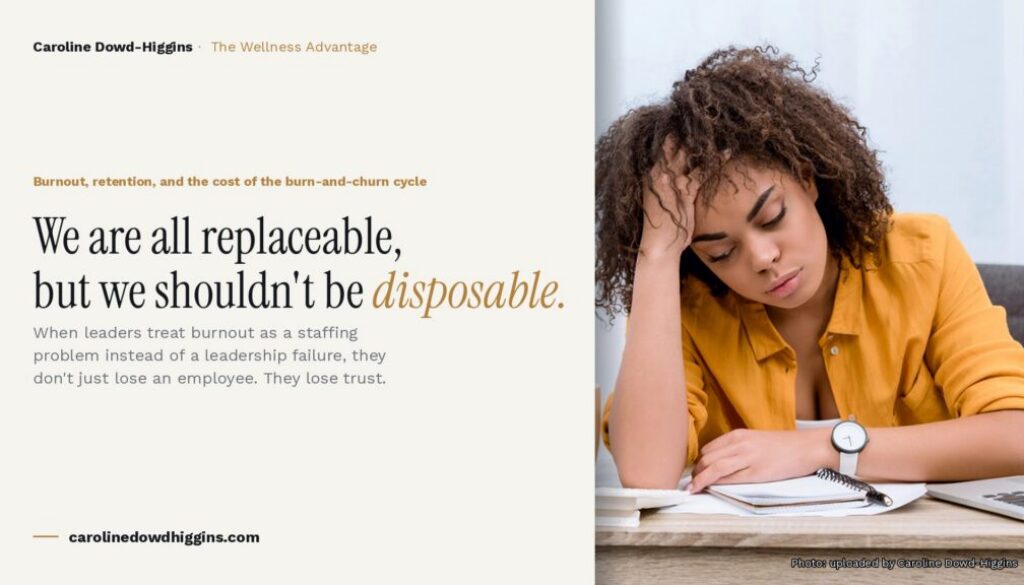
That conversation is where an often-quoted line from my, Wellness Advantage keynote was born: We are all replaceable, but we shouldn’t be disposable.
Prevent Burn and Churn
Here’s the distinction. Replaceable is a fact of organizational life. Every role, every title, every seat at the table — someone else could eventually fill it. That’s not an insult. That’s just how organizations work. But disposable is a choice. It’s what happens when a company treats burnout as a staffing problem instead of a leadership failure. Employee flames out, employee gets replaced, rinse and repeat. No autopsy. No accountability. Just the next resume in the pile.
I call this the burn-and-churn cycle, and I’ve watched it up close. My client was a top performer at a fast-growing company — the person every manager wanted on their project. She worked nights, weekends, and canceled her family vacations twice. When she finally cracked, her manager’s response wasn’t concern. It was a shrug and a job posting. She wasn’t treated like a person who’d given everything. She was treated like a part that wore out.
There is No Business Case for Burnout
That’s the cost organizations don’t put in the annual report. Recruiting a replacement is expensive. Onboarding is slow. Institutional knowledge walks out the door and doesn’t come back. And the employees who watch it happen? They take notes. They see exactly how disposable they are, and they start protecting themselves accordingly — quiet quitting, guarding their energy, keeping one foot out the door. You can’t build loyalty in a culture that treats people as fungible.
Retention isn’t a perks problem. It’s not solved with gourmet coffee stations or a wellness app nobody opens. Retention is a capacity problem. It’s what happens when leaders build systems that can absorb pressure without grinding their best people into dust — clear priorities, realistic workloads, permission to say no, and leaders who notice when someone’s running on empty before the empty becomes a resignation letter.
It’s Time to Do Better
So, here’s the reframe – the goal isn’t to make anyone irreplaceable. That’s an ego trap, and it’s not possible. The goal is to build a workplace where people never have to find out if they’re disposable — because you never let it get that far.
A few places to start:
- Ask your top performers what’s sustainable, not just what they’re capable of. Capability and sustainability are not the same question.
- Build capacity before a crisis forces you to, not after someone’s already gone.
- Notice the warning signs — missed deadlines, short tempers, disappearing energy — and address them like the leadership issue they are, not a performance issue.
- Say it out loud to your team: “You are not disposable here.” Then build the systems that back it up.
Every person on your team is replaceable in theory. The organizations that win aren’t the ones that pretend otherwise — they’re the ones that never make anyone find out the hard way.
You deserve a work culture where you can do your best work and live your best life.
If you want to create a culture where peak performance beats burnout, I’d love to be part of that transformation.
#WellnessAdvantage #PeakPerformance #EmployeeEngagement #BurnoutPrevention #ROI #LeadershipDevelopment #HealthyWorkplace #ExecutiveCoach #KeynoteSpeaker #CarolineDowdHiggins #CultureMatters #CareerGrowth