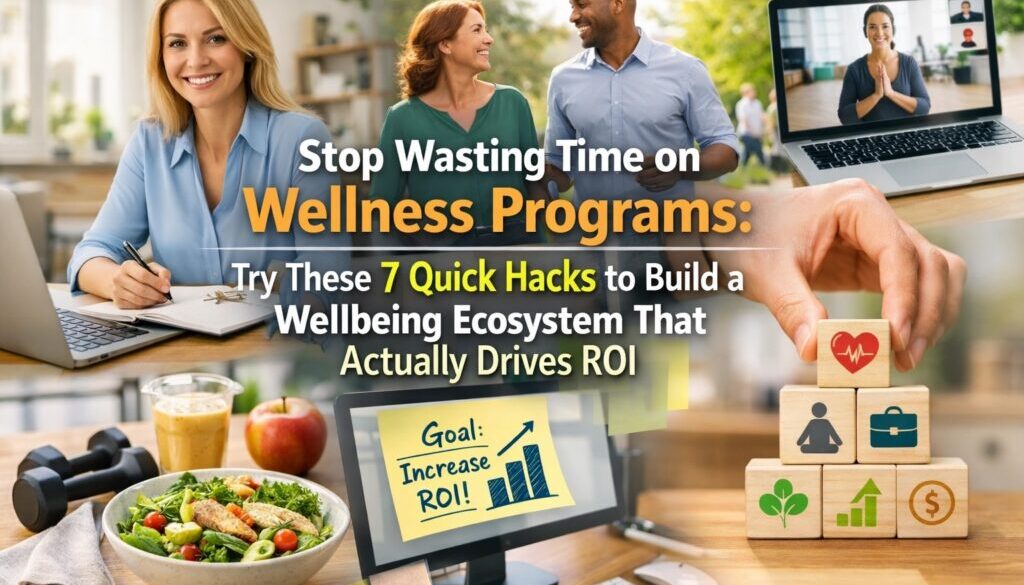
Stop Wasting Time on Wellness Programs: Build a Wellbeing Ecosystem That Drives ROI
Let me guess – your company rolled out a wellness program. Maybe you got yoga classes, a meditation app subscription, or those standing desks everyone requested. And yet… burnout is still through the roof, turnover is climbing, and your team looks about as energized as a smartphone at 2% battery.
Here’s the truth bomb: “You can’t yoga your way out of burnout!” My favorite quote from Paula Davis, founder of the Stress and Resilience Institute.
Most wellness programs fail because they’re treating a systemic problem with superficial solutions. It’s like handing out umbrellas during a hurricane and calling it disaster relief. What your organization needs is a wellbeing ecosystem– a holistic, data-driven approach that doesn’t just make people feel good temporarily but drives measurable ROI.
Ready to stop wasting time and start building something that works? Here are seven quick hacks that’ll transform your approach.
1. Go Comprehensive, Not Piecemeal
Stop offering wellness a la carte. Companies with comprehensive programs spanning four or more support areas achieve an ROI of 150% or higher; that’s 24% more likely than organizations limping along with one or two token offerings. Combine physical health initiatives (gym memberships, ergonomic assessments), mental health support (counseling access, stress management workshops), social connection opportunities (team challenges, mentorship programs), plus education and incentives. Think ecosystem, not event.
2. Make It Universal, Not Just for the “Broken”
Here’s where most organizations get it backwards, they target wellness interventions only at employees who are already struggling. But universal wellbeing programs available to everyone generate “$6.30 for every $1 invested, compared to just $4.70.” for targeted interventions. Prevention beats reaction every single time. When you create ways to nurture yourself and your teams before crisis hits, you’re building resilience into your culture, not just applying Band-Aids.
3. Prioritize Mental Health Like Your Bottom Line Depends on It
Because it does. Mental health programs deliver a 4:1 ROI, and Employee Assistance Programs return an eye-popping $10.85 for every $1 spent. Yet many organizations still treat mental health support like a “nice to have” instead of mission-critical infrastructure. Make on-demand counseling accessible. Train managers to make people feel at ease when discussing mental health. Remove the stigma and watch productivity soar.
4. Tackle Presenteeism Head-On
Forget absenteeism for a moment. The real productivity killer is presenteeism: employees showing up but operating at half-capacity because they’re stressed, exhausted, or mentally checked out. In the US alone, presenteeism costs businesses $32.8 – $38.2 billion annually. Your wellbeing ecosystem needs to address the root causes: unrealistic workloads, lack of recognition, values mismatches. This is where sustainable change happens.
5. Drive Engagement Like Your ROI Depends on It (Because It Does)
Here’s a stat that should wake up every leader: 97% report that higher wellness program engagement directly drives higher ROI. But engagement doesn’t happen by accident. You need crystal-clear communication about benefits, flexible delivery options (hybrid workers exist!), incentives tied to participation, and leadership modeling the behavior. Make wellbeing easy, accessible, and celebrated: not another corporate checkbox.
6. Customize to Your Culture, Not Corporate Copy-Paste
There’s no one-size-fits-all solution here. Survey your people. What do they really need? What would genuinely help them thrive? Maybe your remote team needs virtual connection opportunities more than gym memberships. Maybe your night-shift workers need flexible mental health access more than lunchtime yoga. Tailor your ecosystem to your workforce’s real needs, not what some consultant’s template says you should offer.
7. Secure Leadership Buy-In and Track Everything
Without C-suite commitment and consistent monitoring, even the best-designed programs fizzle out. Get senior leaders visibly participating. Track healthcare costs, absenteeism, productivity metrics, employee satisfaction scores, and participation rates. Review feedback regularly and refine your approach. This isn’t set it and forget it, it’s an evolving system that requires attention and investment.
The Bottom Line
Building a wellbeing ecosystem isn’t just the right thing to do – it’s smart business. When you move beyond superficial wellness programs to sustainable, comprehensive support systems, you unlock tangible returns: higher productivity, lower turnover, reduced healthcare costs, and teams that want to show up and do their best work.
Want to dive deeper? Check out my Healthy and Productive Workplace Playbooks, complete with a free survey to assess where your organization stands. And if you’re ready to transform your workplace culture from burned out to brilliant, let’s talk about bringing a keynote or workshop to your team.
Because investing in your people isn’t just nice – it’s necessary.
#WorkplaceWellbeing #EmployeeEngagement #BurnoutPrevention #ROI #LeadershipDevelopment #HealthyWorkplace #ExecutiveCoach #PeakPerformance #KeynoteSpeaker #CarolineDowdHiggins