What Does Burnout Cost an Organization?
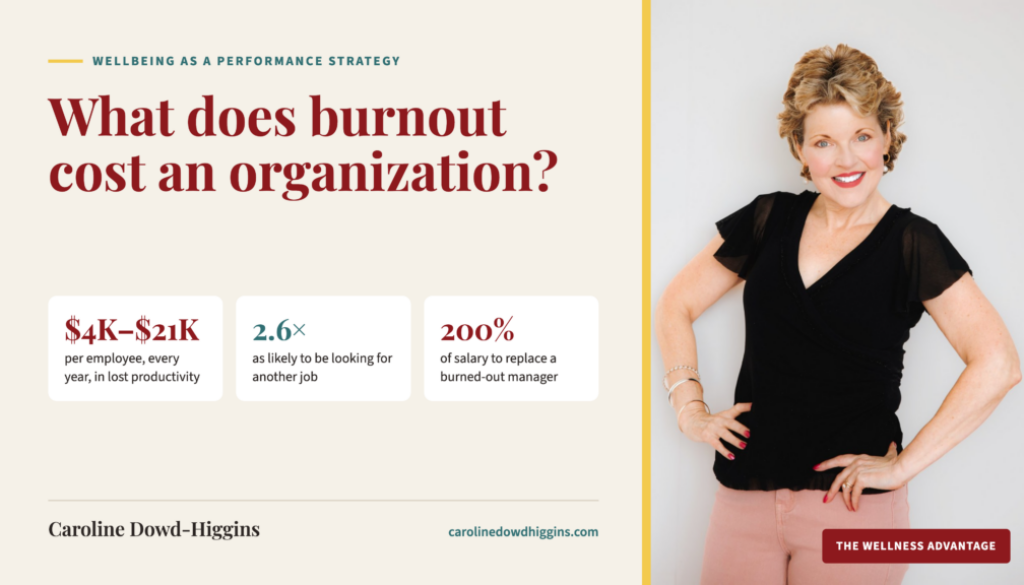
Burnout costs organizations about $4,000 to $21,000 per employee every year in lost productivity, and that’s before a single person resigns. For a typical 1,000-person company, that adds up to roughly $5 million a year, and the bill climbs fast when burned-out people walk out the door.
I know this cost from the inside. I was the over achiever who said yes to everything and wore busy like a badge of honor, right up until I hit a wall. My employer never saw a line item for my burnout. Still, they paid for it, in slower decisions, less creativity, and the energy I stopped bringing to my team.
Because leaders can’t fix what they don’t measure, let’s put real numbers on it.
How much does burnout cost per employee?
A 2025 study in the American Journal of Preventive Medicine modeled what burnout costs U.S. employers each year, by role:
- Hourly employees: about $4,000
- Salaried, non-manager employees: about $4,300
- Managers: about $10,000
- Executives: more than $20,000
The same researchers found burnout can cost up to 2.9 times what an employer spends on health insurance per person, and up to 17 times what it spends on training. In other words, many organizations are spending more on burnout than on developing their people. They just don’t see the invoice.
Why does burnout drive turnover?
Burnout and resignation letters travel together. Gallup found that employees who feel burned out very often or always are 63% more likely to take a sick day and 2.6 times as likely to be actively looking for a different job.
As a result, the cost multiplies when they leave. Gallup estimates the price of replacing someone at about 40% of salary for frontline workers, 80% for technical roles, and 200% for leaders and managers.
| Role | Yearly cost of burnout | Cost to replace if they leave |
| Hourly or frontline employee | About $4,000 | About 40% of salary |
| Professional or technical role | About $4,300 | About 80% of salary |
| Manager | About $10,000 | About 200% of salary |
| Executive | $20,000+ | About 200% of salary |
For example, a burned-out manager earning $100,000 can cost about $10,000 a year while they stay, and about $200,000 if they go.
Why are managers the biggest burnout risk right now?
Gallup’s 2026 State of the Global Workplace report shows global engagement fell to 20% in 2025, and the drop was led by managers. Manager engagement slid from 31% in 2022 to 22% in 2025. Gallup puts the price of low engagement at about $10 trillion in lost productivity, roughly 9% of global GDP.
That matters because managers are the most expensive people to replace, and their energy sets the tone for everyone who reports to them. When a manager burns out, the team usually picks up the slack, which is exactly how burnout spreads. Gallup estimates that managers account for 70% of the variance in their team’s engagement, so a depleted manager rarely leads an energized team.
What are the hidden costs of burnout?
The hidden costs of burnout are the ones that never show up on a budget report: weaker performance from people who stay, lost knowledge from people who leave, and extra strain on everyone left covering the gap. Even though they are harder to count, leaders feel them every day.
- Performance quietly slips. Gallup found burned-out employees are 13% less confident in their performance and half as likely to talk with their manager about how to reach their goals.
- Health costs climb. The same research shows burned-out employees are 23% more likely to visit the emergency room.
- Knowledge walks out the door. When an experienced person leaves, their relationships, judgment, and know-how leave with them.
- Your best people carry the load. Someone has to cover the open role, and it’s usually your strongest performers, the ones you can least afford to lose next.
This is why I call burnout a business problem, not a personal failing. It shows up in your results long before it shows up in an exit interview.
What can leaders do to reduce the cost of burnout?
Start with a reframe: wellbeing is a performance strategy, not a perk. That’s the heart of The Wellness Advantage, my keynote on burnout recovery as a performance strategy. Here’s where to begin:
- Ask before they leave. Gallup found 51% of employees who quit said no manager or leader talked with them about their job satisfaction in the three months before they left. A real conversation costs nothing.
- Fix the workload before you add a wellness app. You can’t yoga your way out of a culture that’s burning people down.
- Build capacity, not just relief. Time off helps. However, your top performers need systems that make the work sustainable. That’s the focus of The Capacity Advantage, my keynote on preventing burnout in high performers.
- Support your managers first. They carry the most cost and the most influence.
- Track it like a business metric. Add burnout questions to your pulse surveys and review the trend alongside turnover.
Burnout is expensive. Wellbeing, on the other hand, is the better investment, and the return shows up in performance, retention, and the energy your people bring to work every day.
If you want your leaders to see wellbeing as a performance strategy, let’s talk about bringing The Wellness Advantage to your next leadership meeting or conference.