What Makes a Team the Best You’ve Ever Been On?
As a certified Gallup Strengths Coach, I’ve spent years watching teams come together and fall apart, and I’ve always believed the difference isn’t talent or task list. It’s trust. A new Gallup report, CliftonStrengths and Team Experiences, just backed that up with data, and it’s worth every leader’s attention.
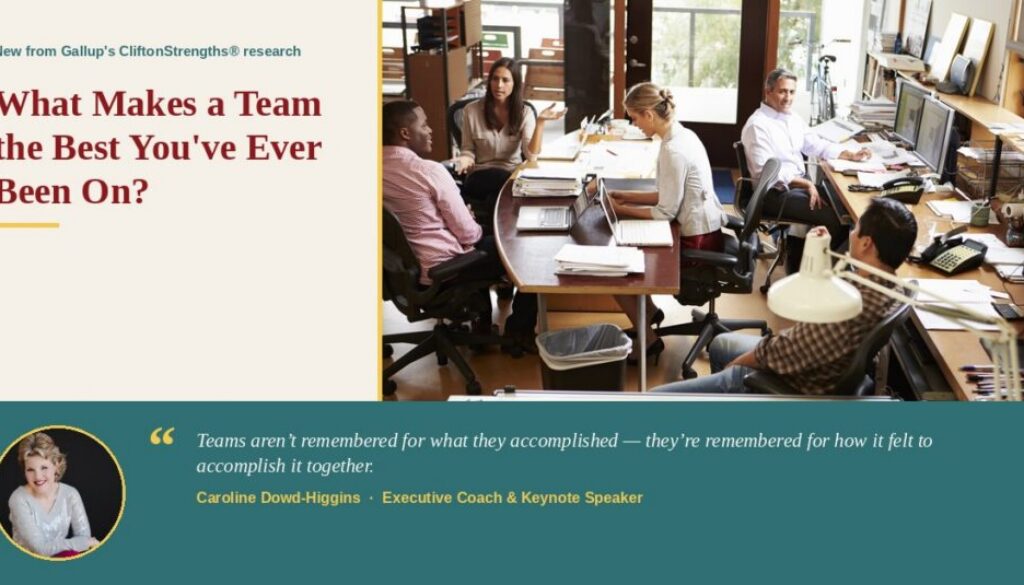
Gallup surveyed thousands of people who’d completed the CliftonStrengths assessment and asked them to think back on the best and worst teams they’ve ever been part of, at work, in school, on the field, anywhere. The results confirm what I coach clients on every week – teams aren’t remembered for what they accomplished. They’re remembered for how it felt to accomplish it together.
The Best Teams Share Three Things
People described their strongest team experiences with the same words, over and over – commitment and dedication, trust and respect, real collaboration. Meeting deadlines barely registered. Producing “high-quality results” barely registered. What people carried with them was whether they felt trusted and whether the work mattered.
The Worst Teams? Same Story, Flipped.
The most common reasons people described their most dysfunctional teams were poor leadership, lack of collaboration, broken communication, and eroded trust. Not missed deadlines. Not sloppy output. Relationship breakdowns, full stop.
Here’s the nuance I love.
People with different leading CliftonStrengths domains notice different things on the same team. Someone who leads with Executing talents is scanning for whether the team hits its marks. Someone who leads with Relationship Building is already sensing the tension in the room before anyone’s said a word out loud. Someone who leads with Strategic Thinking wants a beat to process before jumping into the discussion. None of that is wrong. It’s just different wiring, and it’s why two people can sit in the exact same meeting and walk away with two completely different impressions of how it went.
That’s the real value of strengths awareness. It’s not about predicting what your team will clash over. Gallup found conflict shows up at pretty similar rates no matter which domain someone leads with. What strengths give you is a shared language for working through it once it happens, so a disagreement about deadlines doesn’t quietly turn into a story about who doesn’t respect whom.
And then there’s the manager factor, which didn’t surprise me one bit.
Across every strengths profile, people described their best managers the same way: supportive, trusting, honest, fair, willing to give autonomy instead of hovering over every task. The worst managers were remembered for micromanaging, arrogance, and silence. Great management isn’t a personality type. It’s a set of behaviors, and every manager can build them, regardless of their own natural talents.
If you lead a team, here’s what I’d ask you to sit with this week. Do the people on your team know each other’s strengths well enough to explain why they see the same meeting so differently? If not, that’s your starting point. Strengths awareness isn’t a nice-to-have workshop exercise. Gallup’s own research shows it predicts performance more than the mix of strengths on your team does.
You don’t have to choose between building a high-performing team and building a team people actually want to be part of. It need not be an either/or. The data says the second one gets you the first.
Do your best work. Live your best life.
As a former executive leader, I’m now a speaker and executive coach with expertise in peak performance and workplace culture who empowers leaders and organizations to do their best work and live their best lives.
#CliftonStrengths #Teanwork #Strengths #ExecutiveCoach #Leadership #KeynoteSpeaker #CarolineDowdHiggins