You Can’t Delegate What You Still Own: How to Reclaim Your Mental Load
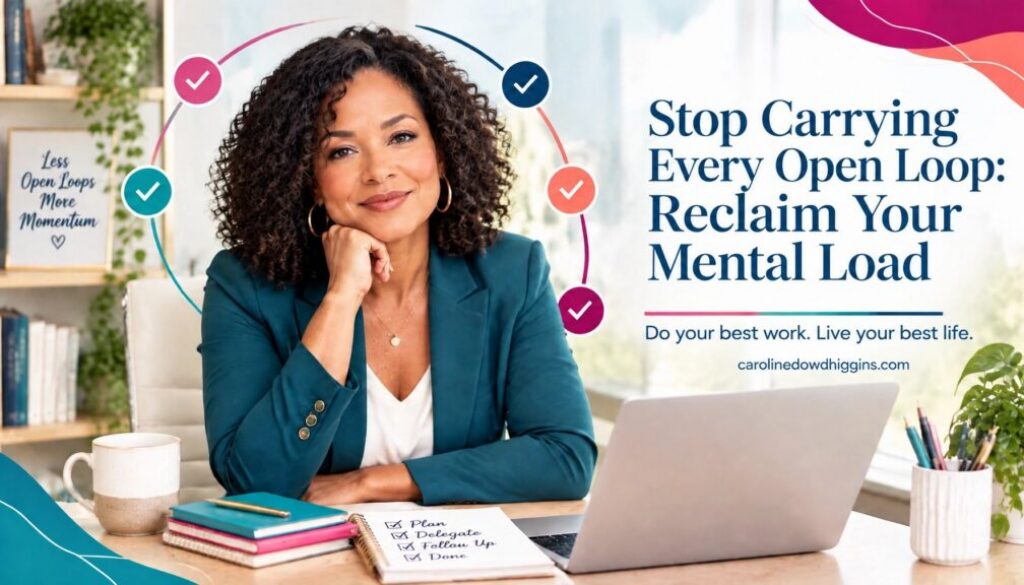
Mental load is not simply having too much to do. It is having to notice what needs attention, define what “done” means, and verify that the result is complete.
That distinction matters. Because when you delegate the labor but retain the accountability, you do not actually lighten your load. You add a management layer.
Delegate the outcome: not just the task
In her Chief article, “You Can’t Delegate What You Still Own,” Meghan Joyce explains why traditional delegation so often fails.
You ask someone to schedule the appointment, initiate the return, or handle the insurance issue. Yet you still wonder:
- Was it scheduled at the right time?
- Did the refund actually arrive?
- Did someone follow up when the first attempt failed?
The task is assigned, but the outcome remains yours.
Joyce’s insight applies far beyond executive life. At work and at home, effective delegation means transferring ownership, standards, and verification. You are not merely assigning activity. You are assigning responsibility for a result.
The essential question is: Who closes the loop?
Use AI for Coordination and Humans forJudgment
AI is rapidly improving the digital coordination layer. It can remember preferences, organize information, route requests, sequence dependencies, and verify whether a step is complete.
But many burdens remain analog – phone calls, appointments, negotiations, waiting on hold, navigating a complicated system, and persuading another human to solve a problem.
That points toward a practical division of labor:
- AI supports remembering, routing, and verifying.
- Skilled humans provide judgment, persistence, and real-world navigation.
The technology is not the strategy by itself. The strategy is building a support system that closes loops without requiring you to remain the central operating system.
Stop Mistaking Fear for Diligence
Letting go can feel risky, especially when the work involves your family, your team, your reputation, or your standards.
You may tell yourself that constant vigilance proves you care. But sometimes fear wears diligence as a costume. Releasing ownership does not mean lowering your standards. It means creating accountability strong enough to earn your release.
Define what “done right” means. Identify who owns the outcome. Establish a clear confirmation point. Then resist the urge to recheck what you have genuinely transferred.
That is sustainable performance in practice: less invisible labor, more capacity for meaningful work and life.
Run a Two-Week Open-Loop Audit
For the next two weeks, track every item where you are the only person who would notice if it failed.
These are your open loops.
Then ask of each one:
- Does this close without me?
- Who owns the outcome?
- Is “done” clearly defined?
- What system or person verifies completion?
- What would allow me to release this responsibility?
Reclaiming capacity does not mean proving you can carry more. It means owning less: and building the structures that let you trust what happens next.
For more practical strategies to create healthy, sustainable performance, explore Caroline Dowd-Higgins’ executive coaching and Speaking topics.
Source note: This post synthesizes ideas from Meghan Joyce, “You Can’t Delegate What You Still Own,” published by Chief. Caroline Dowd-Higgins’ applications and workplace perspective are distinct.
Do your best work. Live your best life.
#MentalLoad #WomenInLeadership #SustainablePerformance #WorkplaceWellbeing #Delegation #BurnoutPrevention